
Our Science
Science held to the standard medicine already trusts.
Every genome we sequence passes through the same accredited, clinically validated pipeline used by hospital genetics departments.
Lab Accreditations
Certified to the standards hospitals require.
Our laboratory holds every major accreditation required for clinical genomic testing. These are not self-reported claims -- they are externally audited, independently verified credentials.
ISO 15189
International Standard for Medical Laboratories
The only international accreditation specifically designed for medical testing laboratories. Covers both quality management and technical competence for clinical sequencing.
CAP
Gold Standard for Laboratory Quality
Accredited by the College of American Pathologists -- the same inspection programme used by Mayo Clinic, Cleveland Clinic, and leading reference labs worldwide.
CLIA
Clinical Laboratory Improvement Amendments
Federally regulated certification ensuring every analytical step, from DNA extraction to variant calling, meets the standard required for clinical decision-making.
ACMG
Used by Mayo Clinic, Johns Hopkins, NHS Genetics
Variants are classified using American College of Medical Genetics guidelines -- the same framework applied at the world's leading academic medical centres.
Clinical Laboratories
Leading the way in consumer DNA
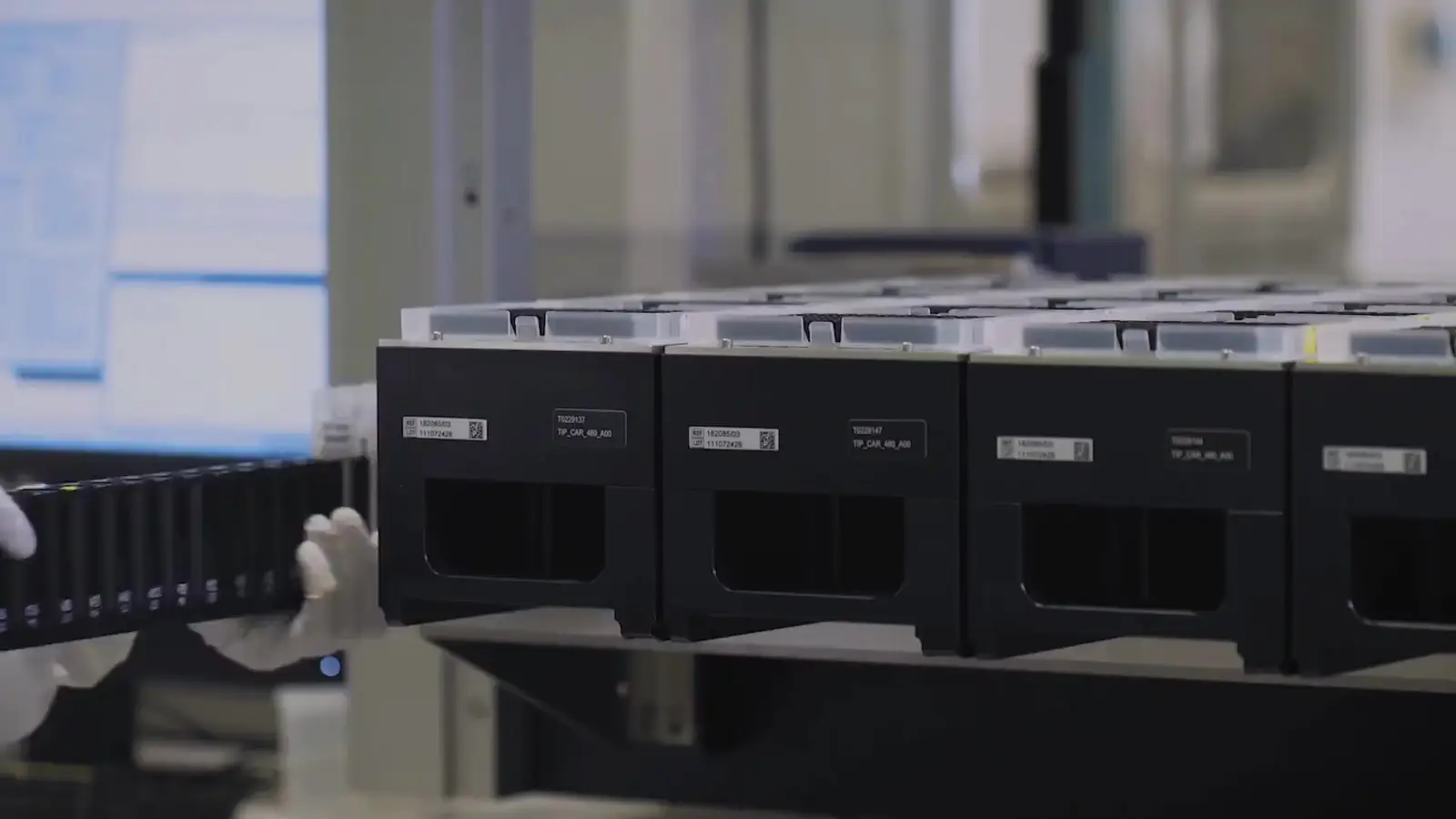
Our laboratories are recognised for delivering the clinical-grade sequencing: every letter, read 30-times over.

Dante maintains clinical-grade laboratories holding both ISO 15189 and CAP accreditation the same dual standard required by hospital systems when approving laboratories for clinical use. This is not a software layer built on top of third-party sequencing. Dante's labs perform the sequencing, apply the classification, and produce the reports under one accredited operation.
At 30X coverage, every base pair in your genome is read 30 times independently, cross-referenced for consistency, and validated against the clinical accuracy standard required for physician-usable results.
Production Scale
99.98% accuracy across 100,000+ production genomes.
1.3M+ clinical reports generated and counting. Every report undergoes automated quality control, bioinformatics review, and variant-level validation before delivery.
Whole genome coverage
Variants identified per test
Customized clinical reports
Sequencing accuracy
Clinical Validation
Published, presented, and adopted in clinical practice.
Our reports are used directly by hospital genetics teams for diagnostic work-ups, treatment selection, and cascade family screening in clinical settings.
Peer-reviewed · Clinical Case Reports · 2026
Unveiling New Insights: Reinterpreting DES Mutation, p.Arg383His, Through a Study of an Iranian Family With Isolated Hypertrophic Cardiomyopathy, Implication for Phenotype–Genotype Correlation Analysis
This study examined an Iranian family with severe hypertrophic cardiomyopathy and, using whole genome sequencing, identified a likely disease-causing p.Arg383His variant in the DES gene. A review of 119 reported DES missense variants found only limited correlation between variant location and clinical outcomes.
Read the summary

Peer-reviewed · International Journal of Genomics · 2026
Alport Syndrome–Associated Pathogenic COL4A4 Variant in Sisters With Chronic Kidney Disease: Clinical Findings and Integrative Network Analysis
This study set out to identify the genetic cause of chronic kidney disease in two sisters using whole-exome sequencing and integrative network analysis. It found an 18-base pair deletion in COL4A4, classified as pathogenic and consistent with autosomal recessive Alport syndrome, with linked PI3K-Akt and AGE-RAGE pathway involvement.
Read the summary
Peer-reviewed · Biology · 2026
Why Should a Genome Be Protected? Ethical, Legal, and Security Challenges in the Protection of Genomic Data
This review examines the ethical, legal, and security challenges of protecting genomic data. It argues that falling sequencing prices and commercial genome testing raise ethical and privacy risks, and that online genomic datasets need a balance between biosafety oversight and the right to privacy.
Read the summary

Peer-reviewed · Scientific Reports · 2026
Liver transcriptome dynamics in Holstein cows during the periparturient transition
The study compared liver gene expression in six Holstein cows before and after calving to map how the organ adapts to early lactation. It found 198 differentially expressed genes, with a shift towards energy production and cell survival rather than storage and growth.
Read the summary
Dante Labs Atlas
Our reference to the human genome, open to everyone.
Every human gene, the variants ClinVar classifies as disease-causing, and the traits the Human Phenotype Ontology links to them, each on a page of its own with its sources named. It describes the research, never anyone's own genome.
Open the atlasPrivacy & Data Ownership
Your genome belongs to you. Period.
You own your data from the moment your sample arrives at our lab. We never sell, share, or license your genetic information to third parties including employers, insurers, or pharmaceutical companies. Full stop.
HIPAA & GDPR compliant
Your data is protected under both US and EU privacy regulations, regardless of where you live.
Never shared with insurers
Your genetic data is never disclosed to insurance companies, employers, or any third party without your explicit written consent.
Delete anytime
Request complete deletion of your data and biological sample at any point. No questions asked.
Full data export
Download your raw sequencing data (FASTQ, BAM, VCF) at any time. It is your data -- take it wherever you want.
The science behind your results.
Your entire genome sequenced in a CLIA-certified, CAP-accredited, ISO 15189 laboratory. 810+ physician-ready reports delivered within 6–8 weeks. Permanent data, updated as science advances.
Free shipping · Results in 6–8 weeks
