YouTube
Michelle
A patient who has truly benefited — and been able to significantly improve her health after getting her genome sequenced.
Documented clinical cases where Dante Genome Test gave patients, their families, and their clinical teams an answer that changed what came next.
Thomas spent years in specialist appointments with no conclusive diagnosis. One whole genome test identified two distinct conditions simultaneously — both accepted by NHS Genetics.
Read case → CHILDHOOD EPILEPSY Seizures that wouldn't stop — until a genetic cause was found.A four-year-old continued to have seizures despite medication. Genomic sequencing identified a metabolic condition that standard tests had missed, and the right treatment followed.
Read case → BREAST CANCER A prior genome scan changed the treatment plan — two years later.Jennifer's genome had been sequenced in 2019. When breast cancer was diagnosed two years later, that existing data flagged a drug incompatibility — and a safer treatment was chosen instead.
Read case → NEUROLOGICAL CONDITION Motor difficulties from infancy, no genetic cause — until now.The clinical signs were visible, but every previous test had failed to explain them. Whole genome sequencing identified the genetic variant responsible and gave the clinical team a confirmed diagnosis to act on.
Read case → CONGENITAL DEAFNESS Deaf from birth, cause unknown — a genome confirmed why.Leon was twelve months old with no identified cause for his deafness. Whole genome sequencing found the GJB2 variant, giving his clinical team a confirmed diagnosis and the basis for early, targeted intervention.
Read case →"They never added the numbers up until now, when they saw the Dante Labs report."
Thomas had spent years in clinical investigation. The presenting picture was complex — a constellation of findings that individually pointed in different directions and, taken together, had not resolved into a diagnosis. Standard pathways had been followed. Specialist referrals made. Results reviewed and returned inconclusive.
Thomas ordered Dante Genome Test. The results were submitted to the NHS genetics team at Queen Elizabeth University Hospital Glasgow.
The team identified two findings: variants associated with Noonan Syndrome, and a RUNX1 deficiency — a genetic marker associated with hereditary leukaemia risk. Neither finding had emerged from any previous investigation. Two conditions, from a single test, reviewed and accepted by the NHS clinical team at a named institution.
RUNX1 · Noonan Syndrome
Two distinct variants identified in a single test — Noonan Syndrome and a RUNX1 deficiency associated with hereditary leukaemia risk. Neither had emerged from any prior investigation.
Dante's Genome Test data was accepted by NHS genetics at Queen Elizabeth University Hospital Glasgow as the basis for identifying Noonan Syndrome and RUNX1 deficiency. The clinical action — diagnosis and subsequent management — was taken by the NHS team. Dante's role was to produce the genomic data. This is a documented clinical outcome attributed to a named institution — not a general endorsement of Dante Labs by the NHS.
"The diagnosis was life-changing. Today my daughter is living a better life."
Angela's daughter was four years old when the seizures began. The episodes were sudden, accompanied by other neurological effects. Consultations with multiple doctors followed. Several medications were tried. The effects were limited. The source of the condition remained unidentified.
Her mother chose Dante's genetic analysis — the epilepsy and neurological conditions panel, which surveys 128 genes. Results were delivered twelve weeks after submission. A geneticist reviewed the report and found it "very informative with comprehensive actionable information."
The finding: GLUT-1 deficiency — a specific form of epilepsy caused by insufficient glucose reaching the brain. The diagnosis changed the treatment plan. A ketogenic diet was introduced. Anticonvulsant medications were reduced.
GLUT-1 Deficiency
Epilepsy caused by insufficient glucose transport to the brain — identified via 128-gene epilepsy panel. Enabled switch from anticonvulsant medication to a targeted ketogenic diet.
The genetic report identified a diagnosis where years of clinical investigation had not. The treatment change — ketogenic diet and medication reduction — was directed by the clinical team acting on this finding. Full verbatim account: "My daughter was four years old when she suddenly started to present seizures and other associated neurological conditions. We consulted many doctors and she took multiple drugs, but with limited effects. Not knowing what to do, I decided to opt for the Dante Labs Analysis... We brought it to a geneticist to get an opinion and he found the reports very informative with comprehensive actionable information and ended up with a final diagnosis."
"Two years before my diagnosis, I had already sequenced my genome. When cancer came, that data was there."
Jennifer sequenced her whole genome with Dante in 2019. Two years later, she was diagnosed with breast cancer.
When oncology treatment was being planned, her clinical team accessed the pharmacogenomics analysis from her existing genome data. The analysis identified that the standard chemotherapy drug she had been prescribed would cause serious adverse effects due to her specific genetic profile.
An alternative drug was selected — a better fit for her genetic makeup. Treatment began immediately, without the time lost to a failed first attempt. The genome data from 2019 was the asset that made this decision possible before treatment started.
Pharmacogenomics — Chemotherapy Incompatibility
Pre-existing genomic data flagged a serious adverse reaction risk to the prescribed chemotherapy drug. An alternative agent was selected before treatment began — avoiding a failed first attempt.
Jennifer's pre-existing genome data, sequenced two years before her cancer diagnosis, provided her clinical team with pharmacogenomics information at the moment it was needed. The treatment decision was made by her oncologist. Dante's data was the clinical input. This case demonstrates the permanent value of genomic data generated at any point prior to a clinical event.
"You save lives." — Dante Labs customer
"Having seen how useful your reports are and having been identified as having long QT Syndrome, I have ordered 3 more test kits for family members. Despite my initial poor experience with Dante, I am pleased I stuck with you, as my results might just save a life in my family as this is the first time KCNQ1 has been raised."
"After years of trying to find out what was wrong with my kids and I, thanks to Dante Labs we now have an answer. Our symptoms match the results. We are in Australia and are now waiting on specialists."
"We received our tailored rare disease report this morning. It is exactly what we needed. The results look like they will be very helpful and are more comprehensive than we have had within our own healthcare system."
"We finally had something concrete — a name, a cause, a reason."
Zarnish was born of a consanguineous marriage. From early development, she showed difficulty sitting independently, holding her head, and bearing weight. She had left-side weakness and spasticity, and was unable to walk without support. The clinical picture pointed toward a neurological condition without a confirmed genetic basis.
Genome Test identified a homozygous missense variant in the GJC2 gene — a finding closely associated with Leukodystrophy, a condition affecting the myelin sheath of the nervous system. The symptoms associated with this variant — nystagmus, impaired motor development, progressive spasticity — were consistent with Zarnish's clinical presentation.
The GJC2 finding established the genetic basis for what was being observed. A targeted care pathway was developed. Early specialist intervention was possible because the genetic cause had been identified.
GJC2
Homozygous missense variant — closely associated with Leukodystrophy. Explains presenting symptoms: nystagmus, impaired motor development, progressive spasticity.
The Genome Test result provided the genetic evidence that grounded Zarnish's clinical presentation in a specific, characterised condition. The care pathway was developed by her clinical team on the basis of this finding. Early intervention — made possible by early identification — is the direct clinical benefit in this case.
"At twelve months, we had an answer. We could finally move forward."
Leon was twelve months old when medical professionals were unable to identify the cause of his deafness. Tests had been run. The clinical picture remained unexplained. An answer was needed to define any path forward.
Genome Test identified a pathogenic homozygous variant in the GJB2 gene — associated with Bart-Pumphrey syndrome and congenital deafness. The finding was not ambiguous. A genetic basis for Leon's deafness was established.
A clear clinical pathway for treatment and care was established. Early intervention — from the earliest stage of life — was now possible because the genetic cause had been identified rather than remaining unexplained.
GJB2
Pathogenic homozygous variant — associated with Bart-Pumphrey syndrome and congenital deafness. Identified at 12 months, enabling intervention at the earliest possible stage.
The GJB2 finding gave Leon's clinical team a defined diagnosis at twelve months — an age when early intervention produces the greatest long-term benefit. The care decisions were made by his clinical team on the basis of the genomic finding. This case demonstrates the specific value of Genome Test for paediatric presentations where standard investigation does not yield a diagnosis.
Identified through the same sequencing process, the same laboratory, and the same clinical reporting standard applied to every Dante genome.
Accredited by & published in
Clinical Laboratory Improvement Amendments
Dante's results are usable in US medical decision-making — not as informational data, but as clinical-grade findings a physician can act on.
International Medical Laboratory Standard
ISO 15189 is what separates a medical lab from a testing service — not a target to reach, but an operating standard. Dante's partner laboratory holds this accreditation.
Patients, families, and clinicians sharing their experience with Dante Genome Test.
Michelle
A patient who has truly benefited — and been able to significantly improve her health after getting her genome sequenced.
Yousef Al-Refaee
After ten years of interest in genetics, he finally got his whole genome sequenced — and found what he was looking for.
Juno Bartsch
An undiagnosed chronic illness. No family history to go on. Dante Labs helped find the genetic causes behind her symptoms.
Content shared with permission. Individual creator views reflect personal experience and do not constitute clinical claims.
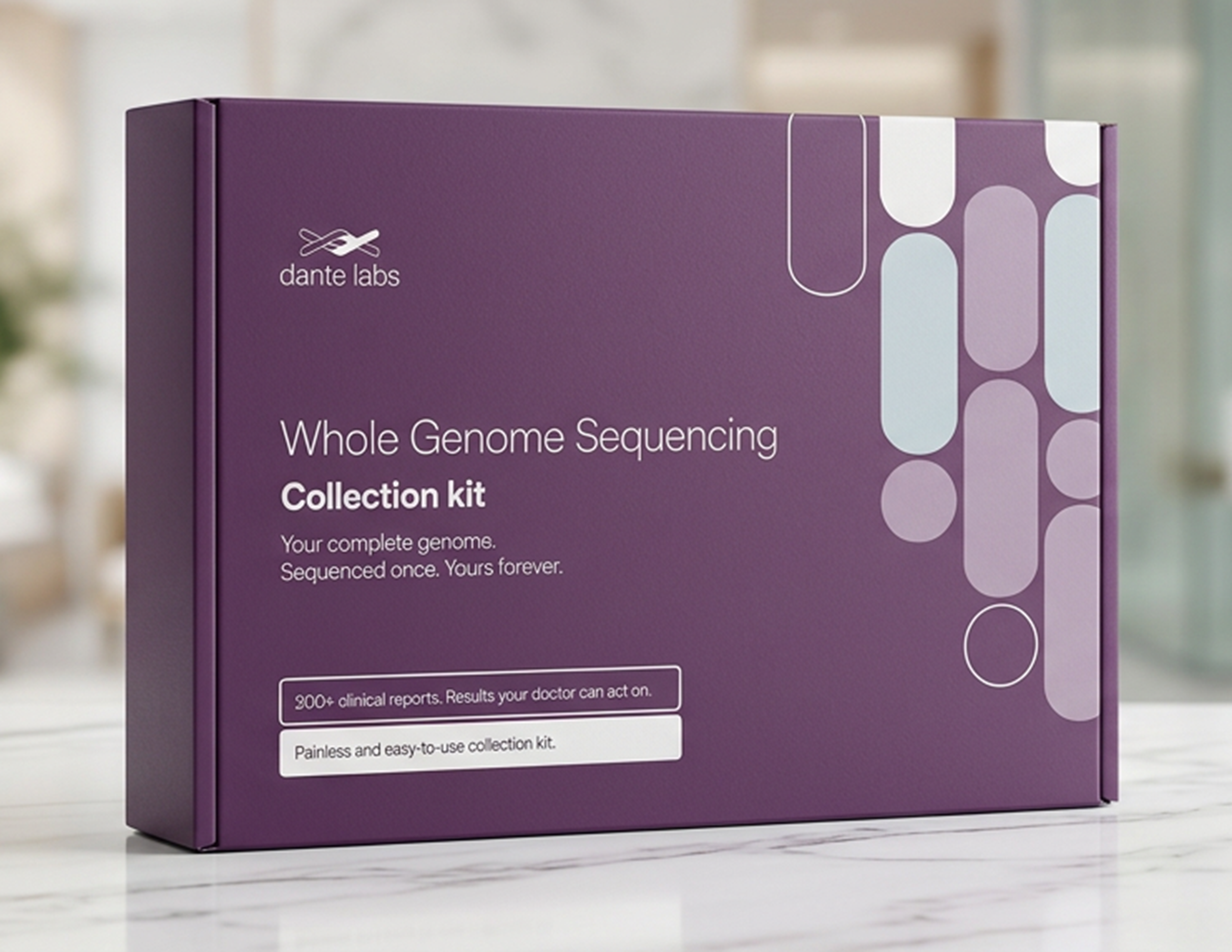
One kit, sent to your home. Your entire genome sequenced at the clinical standard used for diagnostic decisions. 200+ physician-ready reports delivered to your Genome Manager in 6–8 weeks — permanent and updated as science advances.
Ships within 48 hours · Results in 6–8 weeks