Thiopurine Toxicity — TPMT and NUDT15 variants that cause life-threatening bone marrow failure from azathioprine, mercaptopurine, and thioguanine at doses that are well-tolerated by most patients.
Whole genome sequencing provides complete TPMT and NUDT15 genotyping simultaneously — the two genes that together explain the vast majority of severe thiopurine toxicity, including the NUDT15 variants that explain toxicity in East Asian patients who test TPMT-normal.
Thiopurine Toxicity — TPMT & NUDT15
Thiopurines — azathioprine (Imuran), 6-mercaptopurine (6-MP), and 6-thioguanine (6-TG) — are immunosuppressive and cytotoxic agents widely used in hematological malignancies (acute lymphoblastic leukemia), inflammatory bowel disease, autoimmune diseases, organ transplantation, and as maintenance therapy in rheumatoid arthritis. The primary toxicity risk is severe, potentially fatal myelosuppression — bone marrow failure resulting in life-threatening neutropenia, thrombocytopenia, and anemia. Two pharmacogenes are responsible for the majority of clinically significant thiopurine toxicity: TPMT (thiopurine S-methyltransferase) and NUDT15 (nudix hydrolase 15).
TPMT inactivates thiopurines; deficient TPMT activity allows accumulation of cytotoxic thioguanine nucleotides at levels that cause severe myelosuppression. Approximately 10% of the population is TPMT intermediate metabolizers (heterozygous for a loss-of-function variant), and approximately 0.3% are poor metabolizers (homozygous). FDA labeling for azathioprine and 6-MP includes TPMT testing guidance. NUDT15 degrades thioguanine triphosphate; loss-of-function NUDT15 variants similarly lead to accumulation of toxic metabolites. Critically, NUDT15 variants are common in East Asian, South Asian, and Hispanic populations but rare in European ancestry — explaining the observation that many East Asian patients develop severe thiopurine toxicity despite normal TPMT genotyping. NUDT15*2 (p.Arg139Cys) is the most common pathogenic variant.
CPIC provides Level A (highest evidence) guidelines for both TPMT and NUDT15 with thiopurines, recommending dose reductions for intermediate metabolizers in both genes and alternative therapy or dramatically reduced dosing for poor metabolizers. The combination of TPMT*3A compound heterozygosity, NUDT15 homozygous loss-of-function, or any combination of TPMT poor metabolizer and NUDT15 poor metabolizer genotypes creates the highest toxicity risk, approaching complete inability to tolerate even very low thiopurine doses. Testing both genes simultaneously — as whole genome sequencing provides — is essential because TPMT-normal patients may have NUDT15 variants that explain their toxicity.
NUDT15 variants are responsible for most thiopurine toxicity in East Asian, South Asian, and Hispanic patients who test TPMT-normal. A single-gene TPMT test misses the primary toxicity driver in these populations.
TPMT-only testing misses NUDT15 — the primary thiopurine toxicity gene in East Asian and South Asian patients. CPIC Level A guidelines require both genes. Whole genome sequencing covers both in a single test.
Testing only TPMT misses the toxicity driver in East Asian patients
TPMT*3A — the most common TPMT loss-of-function allele — has a carrier frequency of approximately 5% in Europeans but less than 1% in East Asian populations. NUDT15*2 — the most common NUDT15 loss-of-function allele — has frequencies of approximately 8-14% in East Asian populations but is very rare in Europeans. Multiple documented cases exist of East Asian patients who experienced severe thiopurine-induced myelosuppression after testing TPMT-normal, subsequently found to be NUDT15 poor metabolizers. Until NUDT15 testing was added to standard pharmacogenomics panels, these patients had no mechanism-based explanation for their toxicity. Whole genome sequencing routinely calls complete star-allele diplotypes for both TPMT and NUDT15.
The combination phenotype — TPMT intermediate plus NUDT15 intermediate — creates unexpectedly severe toxicity
CPIC guidelines note that patients who are intermediate metabolizers for both TPMT and NUDT15 — a combination that can occur in any population — face toxicity equivalent to poor metabolizer status for either gene alone. This synergistic toxicity risk is only captured when both genes are genotyped simultaneously. A patient who tests 'TPMT intermediate — consider dose reduction' but is not also tested for NUDT15 may receive a thiopurine dose that is too high if they are also NUDT15 intermediate. Whole genome sequencing provides both diplotypes simultaneously, enabling the combined phenotype assessment that CPIC explicitly recommends.
Your full DNA (not just a part of it)
Traditional genetic testing looks at narrow sets of genes, missing most parts of your genome. We sequence your full genome — every gene and every region between genes.
Comprehensive insights and specialized reports
Easy to read and with answers you and your doctor can act on. Not a file to interpret — 200+ clinical reports, organized by category.
Your test becomes more valuable every year
Your DNA does not change, but genome science is accelerating. Every month, new variant-disease associations are discovered. We validate these findings and update your reports automatically. Your test becomes more valuable every year.
The results doctors bring to their hardest cases.
Forty years of uncertainty. One test.
A patient had spent decades in the UK healthcare system without a diagnosis. Dante data, accepted by NHS clinical teams at Queen Elizabeth University Hospital Glasgow, identified Noonan Syndrome and a RUNX1 leukemia-associated variant that had gone undetected. After 40 years, they finally had an answer.
A complete read delivers a complete picture.
A patient came to Dante to investigate periodic paralysis. Reading the complete genome identified a concurrent hereditary cardiac finding — Brugada syndrome — that their doctor confirmed with an ECG. The result also explained a family member's unresolved cardiac history. One test. Every answer in it.
Sequenced in 2019. The data worked in 2021.
Jennifer sequenced her genome with Dante two years before her breast cancer diagnosis. When treatment began, Dante's pharmacogenomics data showed her prescribed chemotherapy would cause serious adverse effects. Her doctor selected an alternative — and she started effective treatment from day one.
Every genetic question deserves a complete answer.
Whether you are searching for answers today or protecting your health for tomorrow, a complete read of your entire genome is the only place to start.
It runs in your family. Now you can know if it runs in your genes.
Your genome contains inherited variants associated with medical conditions like cardiac, cancer, and neurological. We read all of them — with the clinical depth to give the result meaning.
Learn more →When traditional lab tests say you're fine. And you know you're not.
Standard diagnostic tests check for a pre-selected set of answers. We sequence your full DNA — including parts that no test was designed to check. If the answer is in your genome, we will help you find it.
Learn more →Your diagnosis may be right. Your treatment plan may be incomplete.
Your genes determine which treatments are most likely to work — and which are not. We give your doctor the tools and insights to inform your treatment plan.
Learn more →You want to know before something forces the question.
Some people don't wait for a diagnosis or a family history to act. Whole genome sequencing gives you the complete genetic picture now — so you and your doctor can make informed decisions before anything becomes urgent.
Learn more →You already took a DNA test. Here's what it couldn't tell you.
Most consumer DNA tests read less than 0.1% of your genome. We read all of it.
Learn more →Clinical-grade results. Chosen by individuals, trusted by doctors for their most complex cases.
Dante Genome Test helped specialists at a UK national acute hospital in the identification of Noonan Syndrome and a rare leukemia-associated genetic variant that had gone undetected. That result changed the medical care of the patient.
Accredited by & published in
Common questions about whole genome sequencing.
What is the difference between whole genome sequencing and a targeted genetic test?
Targeted genetic tests — including standard hereditary cancer panels — read a pre-defined list of known variants in a specific set of genes. They are designed to find what they already know to look for. Whole genome sequencing reads your entire genome: all 6 billion base pairs, every gene, every region between genes. A Mayo Clinic study published in JAMA Oncology found that standard testing guidelines missed more than half of patients with inherited cancer mutations. Genome Test does not have a fixed list.
What will I receive when my results are ready?
Your Dante Genome delivers 200+ physician-ready reports organized by clinical category — hereditary cancer, cardiac conditions, rare diseases, pharmacogenomics, carrier status, and more. Reports are delivered to your secure Genome Manager and are formatted for direct clinical use. Your genome data is permanently retained and re-analyzed automatically as science advances.
What happens if a clinically significant variant is found?
If a pathogenic or likely-pathogenic variant is identified, it will be clearly flagged in your physician-ready report with clinical context, published evidence, and recommended next steps. We recommend sharing any clinically significant finding with your physician or a genetic counselor, who can guide decisions about surveillance, risk reduction, or cascade testing for family members.
How is this different from a consumer DNA test like 23andMe or AncestryDNA?
Consumer DNA tests use genotyping chips that read less than 0.1% of your genome — a tiny pre-selected set of common variants. They are optimized for ancestry and population-level traits, not clinical genetic findings. The Dante Genome Test sequences 100% of your genome at 30X coverage, the same standard used in clinical diagnostic settings. The two tests are not comparable in scope, methodology, or clinical utility.
How long does it take to get results, and how are they delivered?
Your collection kit ships within 48 hours of ordering. Once your sample arrives at our CLIA-certified laboratory, sequencing and analysis takes 6–8 weeks. Results are delivered securely to your Genome Manager, where you can access your reports, share them with your physician, and receive automatic updates as new findings are validated against your genome.
We work with patient advocacy groups worldwide.
Dante Labs works with patient advocacy groups of any size — for Thiopurine Toxicity — TPMT & NUDT15 and other conditions, rare and common. We support groups in any country, including virtual patient advocacy groups.
We can provide customized reports, group discounts, and packages tailored for your members. Please reach out using the form and we'll be in touch within two business days.
- Custom genomic reports for your members
- Group discounts and tailored packages
- Any country — including virtual groups
- Rare and common conditions covered
Message received.
We'll be in touch within 2 business days. To follow up directly: hello@dantelabs.com
One test.
A lifetime of answers.
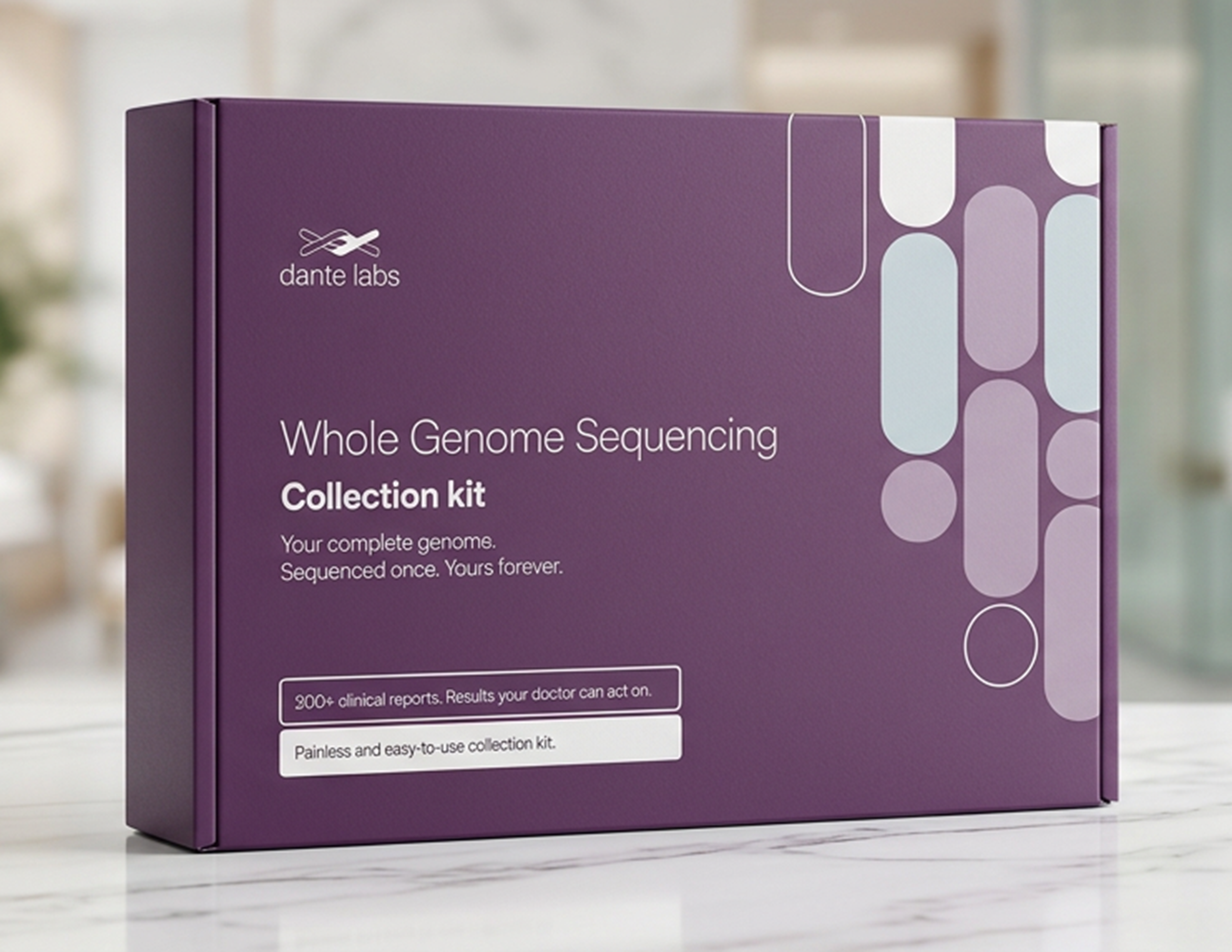
One kit, sent to your home. Your entire genome sequenced at the clinical standard used for diagnostic decisions. 200+ physician-ready reports delivered to your Genome Manager in 6–8 weeks — permanent and updated as science advances.
Ships within 48 hours · Results in 6–8 weeks