Severe abdominal episodes that mimic a dozen other diagnoses. A condition where knowing the genetic cause doesn't just explain the pain — it tells you exactly what medications and triggers to avoid.
Whole genome sequencing identifies HMBS variants that determine acute intermittent porphyria susceptibility — enabling carrier screening and personalized trigger avoidance.
Acute Intermittent Porphyria (AIP)
Acute intermittent porphyria (AIP) is a rare autosomal dominant disorder of heme biosynthesis characterized by acute neurovisceral attacks triggered by specific drugs, hormonal changes, fasting, stress, or illness. Prevalence is approximately 1 in 75,000, though exact prevalence is uncertain due to underdiagnosis. Acute attacks feature severe abdominal pain (often colicky), nausea, vomiting, constipation, tachycardia, hypertension, and neuropsychiatric symptoms including confusion, anxiety, depression, and psychosis. Attacks can progress to dangerous complications including respiratory failure from neuromuscular involvement. Penetrance is remarkably low: only approximately 0.5–1% of germline HMBS variant carriers develop clinical attacks; approximately 20% penetrance is observed in known families with previous cases. Attacks are recurrent once initiated, with stress, menses, fasting, or medication triggering recurrence for decades. Many carriers never develop an attack and remain asymptomatic. The disease has been described as 'the little imitator' because acute presentation can mimic acute abdomen, psychiatric crisis, seizure, or other medical emergencies.
HMBS encodes hydroxymethylbilane synthase (porphobilinogen deaminase), the third enzyme in the heme biosynthesis pathway. It catalyzes the condensation of four molecules of porphobilinogen (PBG) into hydroxymethylbilane (HMB), a critical step in heme synthesis. Loss-of-function HMBS variants cause reduced enzyme activity, permitting accumulation of upstream pathway intermediates (δ-aminolevulinic acid, ALA, and porphobilinogen, PBG), which are neurotoxic. Elevated urine ALA and PBG are diagnostic for acute porphyria. More than 400 HMBS variants have been identified, including nonsense, missense, and splice-site mutations causing variable degrees of enzyme deficiency. In asymptomatic carriers (the majority), enzyme levels are sufficient to prevent attack unless triggered by factors that increase heme demand (e.g., drugs that induce cytochrome P450 enzymes, leading to increased demand for heme cofactor).
An HMBS pathogenic variant identification has major implications for lifestyle and medication safety. Confirmed AIP carriers must avoid 'porphyrinogenic' drugs including barbiturates (phenobarbitone, pentobarbital), sulfonamides, oral contraceptives (though hormone-specific subsets may be safer), NSAIDs, and many others; comprehensive drug lists are maintained at porphyria.org and debrisoquine.org. Carriers must maintain adequate calorie intake (fasting is a trigger), manage stress, and receive education about attack recognition. Acute attacks are treated with IV dextrose or IV hemin (hematin), the latter being highly effective at downregulating ALA synthase and terminating attacks. Givosiran (Givlaari), an RNA interference therapeutic targeting ALAS1 (the rate-limiting heme synthesis enzyme), was approved in 2019 and reduces annualized attack frequency from 12.5 to 3.2 attacks per year in phase 3 trials—a major therapeutic advance. For women, hormonal management during pregnancy and menopause requires careful planning.
Porphyria diagnosis is challenging because acute attacks are rare and unpredictable. Most HMBS carriers are asymptomatic and never diagnosed.
Most HMBS variant carriers remain asymptomatic and undiagnosed
Only approximately 0.5–1% of germline HMBS variant carriers develop clinical attacks; approximately 20% penetrance is observed in families with known cases. Many porphyria panels focus on the most common variants and may miss rare HMBS mutations. Diagnosis is typically made by measuring urine PBG and ALA during or immediately after an acute attack (levels normalize between attacks, making retrospective diagnosis difficult). Carrier testing is useful for presymptomatic family members but not routine. Whole genome sequencing captures all HMBS variants, enabling comprehensive carrier screening in families with known AIP or in individuals with unexplained acute neurovisceral attacks.
HMBS genotype enables lifelong trigger avoidance and attack prevention
Confirmed AIP carriers must permanently avoid porphyrinogenic drugs (barbiturates, sulfonamides, NSAIDs, many others), maintain adequate calorie intake, manage stress, and receive education about attack recognition. A genetic diagnosis enables cascade screening of first-degree relatives, identifying carriers who can be counseled on triggers and medication avoidance before an attack occurs. Documented in the medical record and communicated to the patient, HMBS genotype prevents life-threatening drug reactions and guides personalized attack prevention strategies. Givosiran (Givlaari), approved for AIP, reduces annualized attack frequency from 12.5 to 3.2 attacks per year and offers new hope for frequent attackers. Early identification through genetic screening enables prevention rather than crisis management.
Your full DNA (not just a part of it)
Traditional genetic testing looks at narrow sets of genes, missing most parts of your genome. We sequence your full genome — every gene and every region between genes.
Comprehensive insights and specialized reports
Easy to read and with answers you and your doctor can act on. Not a file to interpret — 200+ clinical reports, organized by category.
Your test becomes more valuable every year
Your DNA does not change, but genome science is accelerating. Every month, new variant-disease associations are discovered. We validate these findings and update your reports automatically. Your test becomes more valuable every year.
The results doctors bring to their hardest cases.
Forty years of uncertainty. One test.
A patient had spent decades in the UK healthcare system without a diagnosis. Dante data, accepted by NHS clinical teams at Queen Elizabeth University Hospital Glasgow, identified Noonan Syndrome and a RUNX1 leukemia-associated variant that had gone undetected. After 40 years, they finally had an answer.
A complete read delivers a complete picture.
A patient came to Dante to investigate periodic paralysis. Reading the complete genome identified a concurrent hereditary cardiac finding — Brugada syndrome — that their doctor confirmed with an ECG. The result also explained a family member's unresolved cardiac history. One test. Every answer in it.
Sequenced in 2019. The data worked in 2021.
Jennifer sequenced her genome with Dante two years before her breast cancer diagnosis. When treatment began, Dante's pharmacogenomics data showed her prescribed chemotherapy would cause serious adverse effects. Her doctor selected an alternative — and she started effective treatment from day one.
Every genetic question deserves a complete answer.
Whether you are searching for answers today or protecting your health for tomorrow, a complete read of your entire genome is the only place to start.
It runs in your family. Now you can know if it runs in your genes.
Your genome contains inherited variants associated with medical conditions like cardiac, cancer, and neurological. We read all of them — with the clinical depth to give the result meaning.
Learn more →When traditional lab tests say you're fine. And you know you're not.
Standard diagnostic tests check for a pre-selected set of answers. We sequence your full DNA — including parts that no test was designed to check. If the answer is in your genome, we will help you find it.
Learn more →Your diagnosis may be right. Your treatment plan may be incomplete.
Your genes determine which treatments are most likely to work — and which are not. We give your doctor the tools and insights to inform your treatment plan.
Learn more →You want to know before something forces the question.
Some people don't wait for a diagnosis or a family history to act. Whole genome sequencing gives you the complete genetic picture now — so you and your doctor can make informed decisions before anything becomes urgent.
Learn more →You already took a DNA test. Here's what it couldn't tell you.
Most consumer DNA tests read less than 0.1% of your genome. We read all of it.
Learn more →Clinical-grade results. Chosen by individuals, trusted by doctors for their most complex cases.
Dante Genome Test helped specialists at a UK national acute hospital in the identification of Noonan Syndrome and a rare leukemia-associated genetic variant that had gone undetected. That result changed the medical care of the patient.
Accredited by & published in
Common questions about whole genome sequencing.
What is the difference between whole genome sequencing and a targeted genetic test?
Targeted genetic tests — including standard hereditary cancer panels — read a pre-defined list of known variants in a specific set of genes. They are designed to find what they already know to look for. Whole genome sequencing reads your entire genome: all 6 billion base pairs, every gene, every region between genes. A Mayo Clinic study published in JAMA Oncology found that standard testing guidelines missed more than half of patients with inherited cancer mutations. Genome Test does not have a fixed list.
What will I receive when my results are ready?
Your Dante Genome delivers 200+ physician-ready reports organized by clinical category — hereditary cancer, cardiac conditions, rare diseases, pharmacogenomics, carrier status, and more. Reports are delivered to your secure Genome Manager and are formatted for direct clinical use. Your genome data is permanently retained and re-analyzed automatically as science advances.
What happens if a clinically significant variant is found?
If a pathogenic or likely-pathogenic variant is identified, it will be clearly flagged in your physician-ready report with clinical context, published evidence, and recommended next steps. We recommend sharing any clinically significant finding with your physician or a genetic counselor, who can guide decisions about surveillance, risk reduction, or cascade testing for family members.
How is this different from a consumer DNA test like 23andMe or AncestryDNA?
Consumer DNA tests use genotyping chips that read less than 0.1% of your genome — a tiny pre-selected set of common variants. They are optimized for ancestry and population-level traits, not clinical genetic findings. The Dante Genome Test sequences 100% of your genome at 30X coverage, the same standard used in clinical diagnostic settings. The two tests are not comparable in scope, methodology, or clinical utility.
How long does it take to get results, and how are they delivered?
Your collection kit ships within 48 hours of ordering. Once your sample arrives at our CLIA-certified laboratory, sequencing and analysis takes 6–8 weeks. Results are delivered securely to your Genome Manager, where you can access your reports, share them with your physician, and receive automatic updates as new findings are validated against your genome.
We work with patient advocacy groups worldwide.
Dante Labs works with patient advocacy groups of any size — for Acute Intermittent Porphyria (AIP) and other conditions, rare and common. We support groups in any country, including virtual patient advocacy groups.
We can provide customized reports, group discounts, and packages tailored for your members. Please reach out using the form and we'll be in touch within two business days.
- Custom genomic reports for your members
- Group discounts and tailored packages
- Any country — including virtual groups
- Rare and common conditions covered
Message received.
We’ll be in touch within 2 business days. To follow up directly: hello@dantelabs.com
One test.
A lifetime of answers.
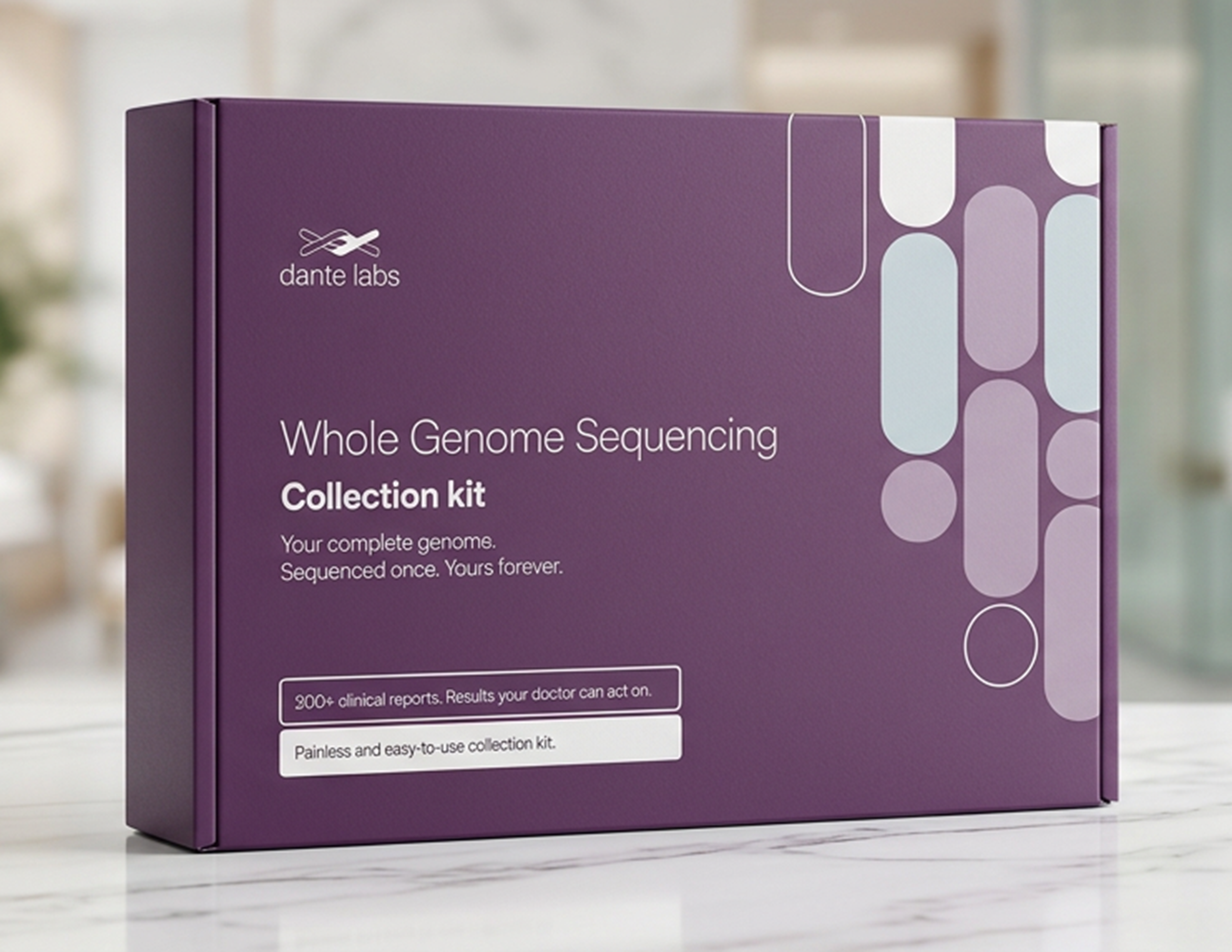
One kit, sent to your home. Your entire genome sequenced at the clinical standard used for diagnostic decisions. 200+ physician-ready reports delivered to your Genome Manager in 6–8 weeks — permanent and updated as science advances.
Ships within 48 hours · Results in 6–8 weeks