CARDIOVASCULAR

A fainting episode that was dismissed. A family history of unexplained cardiac events. An ion channel variant that standard tests don't look for — but that changes how your family is monitored.

Whole genome sequencing identifies the specific ion channel mutations causing Long QT Syndrome — enabling genotype-guided therapy and cascade screening for asymptomatic relatives.

CLIA Certified CAP Accredited ISO 15189 Medical Lab ACMG Classified HIPAA & GDPR 100,000+ Genomes Sequenced
ABOUT LONG QT SYNDROME

Long QT Syndrome

Long QT Syndrome (LQTS) is a cardiac channelopathy characterized by delayed ventricular repolarization — visible on ECG as a prolonged QTc interval (>470ms in males, >480ms in females). This electrical abnormality creates a substrate for torsades de pointes, a life-threatening arrhythmia that can cause syncope and sudden cardiac death. LQTS affects approximately 1 in 2,000 to 2,500 people and accounts for an estimated 3–10% of sudden cardiac death in children and young adults. There are at least 17 genetic subtypes, but three account for approximately 75% of cases: LQT1 (KCNQ1, ~35%), LQT2 (KCNH2, ~30%), and LQT3 (SCN5A, ~10%). Inheritance is predominantly autosomal dominant; the rare autosomal recessive form (Jervell and Lange-Nielsen syndrome) combines LQTS with congenital sensorineural deafness.

The three major genes encode cardiac ion channels with distinct functions. KCNQ1 and KCNH2 encode potassium channels (IKs and IKr) that repolarize the ventricle; pathogenic variants reduce potassium current, delaying repolarization. SCN5A encodes the cardiac sodium channel; mutations in LQTS cause gain-of-function variants that permit persistent inward sodium current during repolarization, also prolonging the QT interval. The genotype-phenotype correlation is clinically important: LQT1 and LQT2 arrhythmias are typically triggered by physical exertion or emotional stress; LQT3 arrhythmias often occur at rest or during sleep. Approximately 25% of clinically diagnosed LQTS patients receive no molecular diagnosis from standard genetic testing.

Identifying a pathogenic LQTS variant transforms management from symptomatic treatment to family-based prevention. Genetic confirmation enables cascade testing of relatives, identifying asymptomatic mutation carriers who may have normal resting ECGs (up to 36% of KCNQ1 carriers show normal QTc). Beta-blockers are first-line therapy and have been shown to reduce sudden death risk by approximately 60%; implantable cardioverter-defibrillators (ICDs) are indicated for those who remain symptomatic despite medications. Gene-specific triggers inform lifestyle counseling: LQT1 carriers avoid strenuous exercise; LQT2 carriers avoid acoustic triggers; LQT3 carriers receive bedtime monitoring. Genetic information also enables reproductive counseling and prenatal testing options.

LQT1, LQT2, and LQT3 have distinct mechanistic bases (potassium channel loss vs. sodium channel gain), genotype-specific triggers (exercise/stress vs. sleep/rest), and different responses to beta-blockade — genotyping fundamentally alters management strategy.

WHY WHOLE GENOME SEQUENCING

Standard LQTS panels cover the major genes but leave 25% of patients genetically undiagnosed. They also cannot detect all structural variants.

One-quarter of clinically diagnosed LQTS patients have negative panels

Targeted LQTS panels typically cover KCNQ1, KCNH2, SCN5A, and 10–14 additional genes. Yet approximately 25% of patients who meet clinical criteria for LQTS receive no molecular diagnosis. Exon-level or whole-gene deletions/duplications in KCNH2 or KCNQ1, found in approximately 3% of LQTS patients, may not be detected depending on sequencing methodology. Additionally, panels test only known LQTS-associated genes — the "missing heritability" may involve variants in novel genes, non-coding regulatory variants affecting ion channel expression, or structural variants that standard panels cannot interrogate. Up to 36% of KCNQ1-related LQTS carriers have normal resting QTc, meaning ECG screening alone also misses carriers.

A finding enables genotype-specific prevention and family screening

When a pathogenic LQTS variant is identified, clinical management becomes genotype-informed. Beta-blockers (which reduce sudden death risk by ~60%) are initiated even in asymptomatic relatives. Gene-specific counseling applies: LQT1 carriers avoid strenuous exercise (highest arrhythmia risk during exertion), LQT2 carriers avoid auditory triggers (loud noises can provoke syncope), LQT3 carriers optimize nighttime monitoring. ICD placement is informed by genotype and family history. Cascade testing identifies asymptomatic relatives — often discovered because they have normal QTc intervals on ECG — enabling preventive therapy before symptoms occur. For young athletes in families with LQTS, genetic testing and pre-participation ECG screening are life-saving interventions.

WHAT SEQUENCING YOUR ENTIRE GENOME ACTUALLY MEANS
01

Your full DNA (not just a part of it)

Traditional genetic testing looks at narrow sets of genes, missing most parts of your genome. We sequence your full genome — every gene and every region between genes.

02

Comprehensive insights and specialized reports

Easy to read and with answers you and your doctor can act on. Not a file to interpret — 200+ clinical reports, organized by category.

03

Your test becomes more valuable every year

Your DNA does not change, but genome science is accelerating. Every month, new variant-disease associations are discovered. We validate these findings and update your reports automatically. Your test becomes more valuable every year.

OUTCOMES

The results doctors bring to their hardest cases.

Forty years of uncertainty. One test.

A patient had spent decades in the UK healthcare system without a diagnosis. Dante data, accepted by NHS clinical teams at Queen Elizabeth University Hospital Glasgow, identified Noonan Syndrome and a RUNX1 leukemia-associated variant that had gone undetected. After 40 years, they finally had an answer.

A complete read delivers a complete picture.

A patient came to Dante to investigate periodic paralysis. Reading the complete genome identified a concurrent hereditary cardiac finding — Brugada syndrome — that their doctor confirmed with an ECG. The result also explained a family member's unresolved cardiac history. One test. Every answer in it.

Sequenced in 2019. The data worked in 2021.

Jennifer sequenced her genome with Dante two years before her breast cancer diagnosis. When treatment began, Dante's pharmacogenomics data showed her prescribed chemotherapy would cause serious adverse effects. Her doctor selected an alternative — and she started effective treatment from day one.

See outcomes →
WHO WE HELP

Every genetic question deserves a complete answer.

Whether you are searching for answers today or protecting your health for tomorrow, a complete read of your entire genome is the only place to start.

ALREADY TESTED

You already took a DNA test. Here's what it couldn't tell you.

Most consumer DNA tests read less than 0.1% of your genome. We read all of it.

Learn more

Clinical-grade results. Chosen by individuals, trusted by doctors for their most complex cases.

30X whole genome coverage
5M+ variants identified per test
200+ customized clinical reports
99.98% sequencing accuracy

Dante Genome Test helped specialists at a UK national acute hospital in the identification of Noonan Syndrome and a rare leukemia-associated genetic variant that had gone undetected. That result changed the medical care of the patient.

Accredited by & published in

Clinical Laboratory Improvement Amendments College of American Pathologists American Society of Human Genetics Nature International Society for Cell & Gene Therapy Gene Journal
FREQUENTLY ASKED QUESTIONS

Common questions about whole genome sequencing.

What is the difference between whole genome sequencing and a targeted genetic test?

Targeted genetic tests — including standard hereditary cancer panels — read a pre-defined list of known variants in a specific set of genes. They are designed to find what they already know to look for. Whole genome sequencing reads your entire genome: all 6 billion base pairs, every gene, every region between genes. A Mayo Clinic study published in JAMA Oncology found that standard testing guidelines missed more than half of patients with inherited cancer mutations. Genome Test does not have a fixed list.

What will I receive when my results are ready?

Your Dante Genome delivers 200+ physician-ready reports organized by clinical category — hereditary cancer, cardiac conditions, rare diseases, pharmacogenomics, carrier status, and more. Reports are delivered to your secure Genome Manager and are formatted for direct clinical use. Your genome data is permanently retained and re-analyzed automatically as science advances.

What happens if a clinically significant variant is found?

If a pathogenic or likely-pathogenic variant is identified, it will be clearly flagged in your physician-ready report with clinical context, published evidence, and recommended next steps. We recommend sharing any clinically significant finding with your physician or a genetic counselor, who can guide decisions about surveillance, risk reduction, or cascade testing for family members.

How is this different from a consumer DNA test like 23andMe or AncestryDNA?

Consumer DNA tests use genotyping chips that read less than 0.1% of your genome — a tiny pre-selected set of common variants. They are optimized for ancestry and population-level traits, not clinical genetic findings. The Dante Genome Test sequences 100% of your genome at 30X coverage, the same standard used in clinical diagnostic settings. The two tests are not comparable in scope, methodology, or clinical utility.

How long does it take to get results, and how are they delivered?

Your collection kit ships within 48 hours of ordering. Once your sample arrives at our CLIA-certified laboratory, sequencing and analysis takes 6–8 weeks. Results are delivered securely to your Genome Manager, where you can access your reports, share them with your physician, and receive automatic updates as new findings are validated against your genome.

PATIENT ADVOCACY GROUPS

We work with patient advocacy groups worldwide.

Dante Labs works with patient advocacy groups of any size — for Long QT Syndrome and other conditions, rare and common. We support groups in any country, including virtual patient advocacy groups.

We can provide customized reports, group discounts, and packages tailored for your members. Please reach out using the form and we'll be in touch within two business days.

  • Custom genomic reports for your members
  • Group discounts and tailored packages
  • Any country — including virtual groups
  • Rare and common conditions covered

One test.
A lifetime of answers.

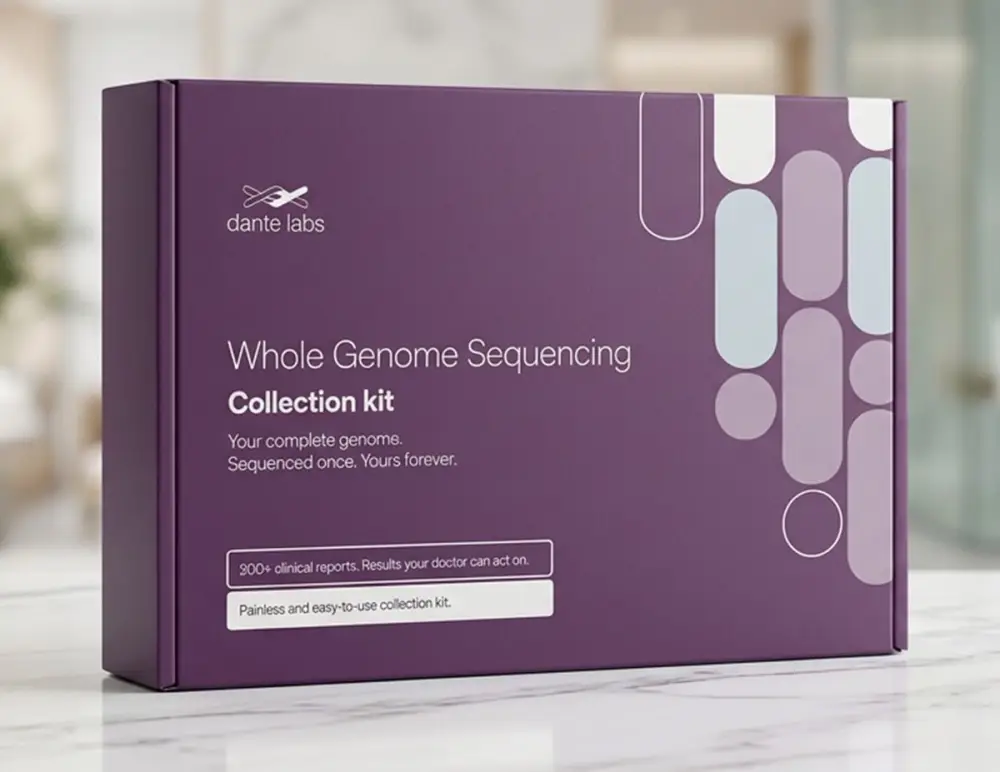
One kit, sent to your home. Your entire genome sequenced at the clinical standard used for diagnostic decisions. 200+ physician-ready reports delivered to your Genome Manager in 6–8 weeks — permanent and updated as science advances.

Free global shipping
Ships within 48 hours
Results in 6–8 weeks

Ships within 48 hours · Results in 6–8 weeks

Dante Labs Genome Test Kit