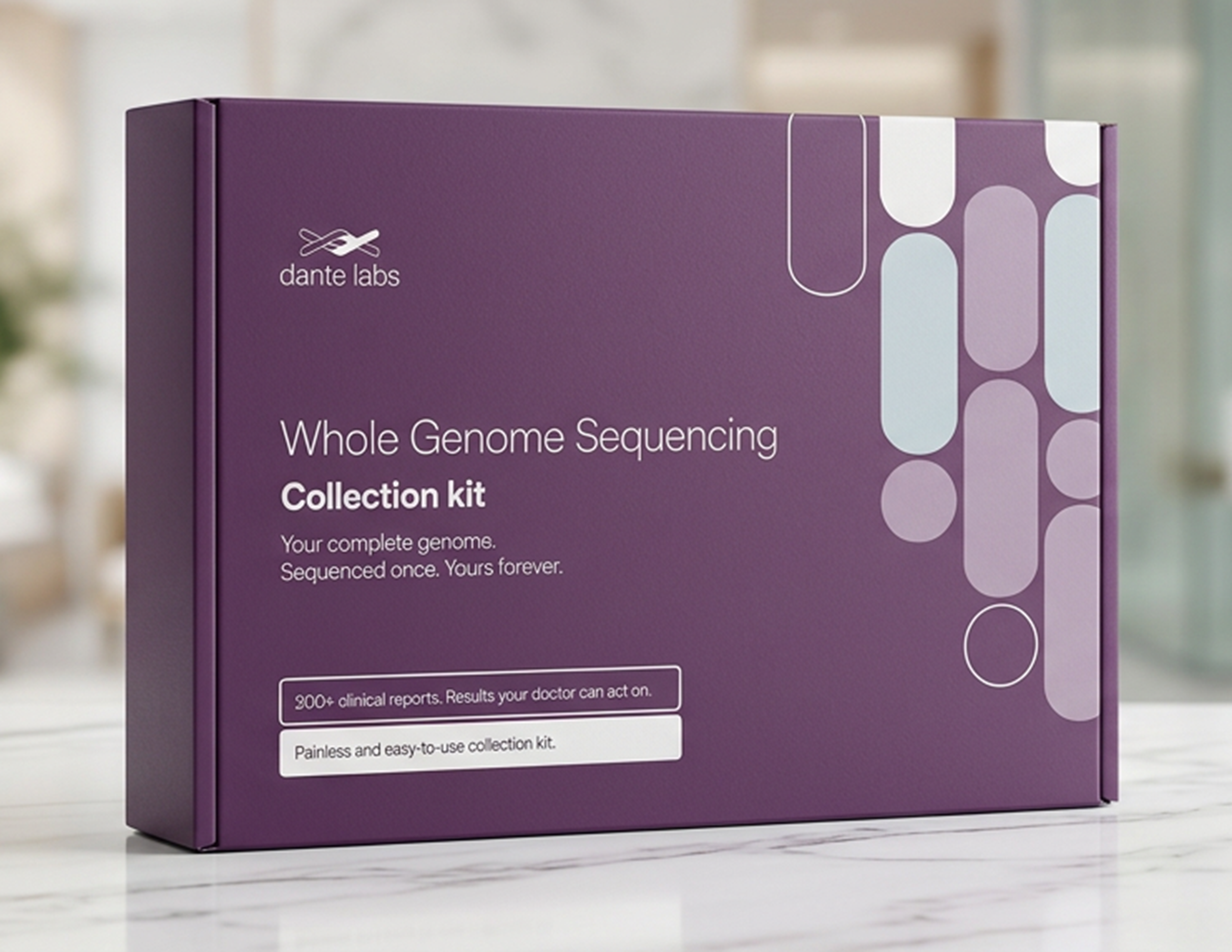
In short: More than 100 peer-reviewed scientific papers have used Dante Labs sequencing and bioinformatics technology. The research spans transcriptomics, CRISPR gene editing, ancient DNA, rare diseases, and oncology, with contributions from scientists in the United States, Italy, Pakistan, Malta, and across Europe. Approximately 80% of these papers studied human samples; the rest examined non-human species including cows, camels, plants, and viruses.
When a single laboratory's technology appears in more than 100 independent, peer-reviewed studies, it stops being a vendor and becomes part of the scientific record. That is where Dante Labs now stands. Academic and clinical researchers around the world have chosen Dante Labs' whole genome sequencing, RNA sequencing, and multi-omics pipelines to power discovery across some of the most demanding areas of modern biology.
Below, we summarize the scope of this body of work — what fields it covers, which institutions and countries are represented, and a few of the studies that best illustrate the breadth of research Dante Labs technology has supported.
Why more than 100 papers matters
Peer-reviewed publication is the standard by which science validates itself. Each paper represents an independent research team that trusted Dante Labs to generate reliable, reproducible genomic and transcriptomic data — and whose results then withstood the scrutiny of expert reviewers. Reaching 100+ publications is a signal of sustained scientific confidence, not a single endorsement.
The work is also strikingly diverse. Roughly 80% of the published papers involved human samples, reflecting Dante Labs' clinical and biomedical focus. The remaining studies reached well beyond human health, sequencing non-human species including cows, camels, plants, and viruses — evidence that the same infrastructure serves agriculture, evolutionary biology, veterinary science, and virology.
Which research fields use Dante Labs technology?
The publications cluster around several fast-moving areas of genomics:
- Transcriptomics and RNA analysis — measuring gene expression to understand how conditions develop and progress.
- CRISPR gene editing — using precise sequencing to design, validate, and verify genome edits.
- Ancient DNA — recovering and interpreting fragile genetic material from historical and archaeological samples.
- Rare diseases — identifying the causal variants behind conditions that often go undiagnosed for years.
- Oncology — characterizing the genomic and transcriptomic changes that drive cancer.
"US and European and Asian scientists send us complex projects for RNA, genomics and multi-omics." — Andrea Riposati, CEO, Dante Labs
A global research community
The scientists and academic groups behind these papers are based in the United States, Italy, Pakistan, Malta, and other European countries. Dante Labs has also contributed its own original research to the literature, with publications appearing in journals such as Gene and Nature Communications.
Studies that show the range
Three published studies capture how differently researchers put the same technology to work:
- Non-invasive prenatal testing (NIPT), Harvard Medical School. Researchers investigated how chromosomal phasing can improve non-invasive prenatal testing — work published in Scientific Reports (DOI: 10.1038/s41598-022-14049-5).
- Duchenne muscular dystrophy, pan-European collaboration. A cross-border team examined transcriptomic profiles in a model of Duchenne muscular dystrophy, published in Scientific Reports (DOI: 10.1038/s41598-025-14756-9).
- Chronic kidney disease, Pakistan. A public-health-focused study addressing early diagnosis of chronic kidney disease appeared in the International Journal of Genomics (DOI: 10.1155/ijog/8868521).
From prenatal medicine at a leading US medical school, to rare neuromuscular disease across Europe, to public health in South Asia, the common thread is the sequencing and bioinformatics that made each dataset trustworthy.
The technology behind the research
What researchers are relying on is the same foundation available to individuals through Dante Labs: clinical-grade whole genome sequencing at 30X coverage, RNA and transcriptomic profiling, and multi-omics analysis backed by a scalable bioinformatics pipeline. It is infrastructure built to handle complex projects — and to produce data that holds up to peer review.
You can explore more about the platform and the science it enables on our Our Science page.
Frequently asked questions
How many scientific papers have used Dante Labs technology?
More than 100 peer-reviewed scientific papers have used Dante Labs sequencing and bioinformatics technology, across transcriptomics, CRISPR gene editing, ancient DNA, rare diseases, and oncology.
What kinds of samples were studied?
About 80% of the published papers involved human samples. The remaining studies covered non-human species, including cows, camels, plants, and viruses.
Where are the researchers based?
Published work has come from scientists in the United States, Italy, Pakistan, Malta, and other European countries, including research associated with Harvard Medical School.
Get new posts from Dante Labs
Genomics insights, product updates, and clinical perspectives — delivered to your inbox.